
Prison Escape Puzzle Adventure
Big Giant GamesAdventure
4.24.03K Reviews
- Version
- 20
- Installs
- 10.00M
- Age Rating
- Everyone 10+
Screenshots
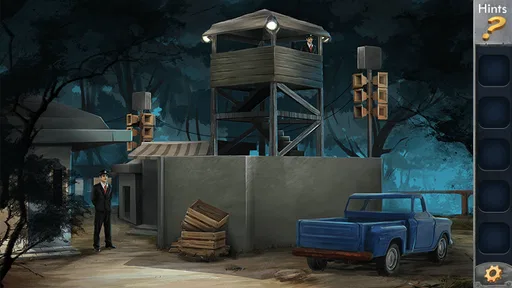

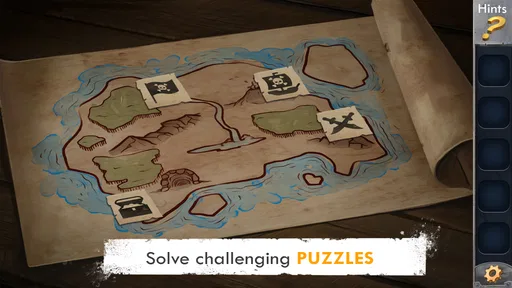
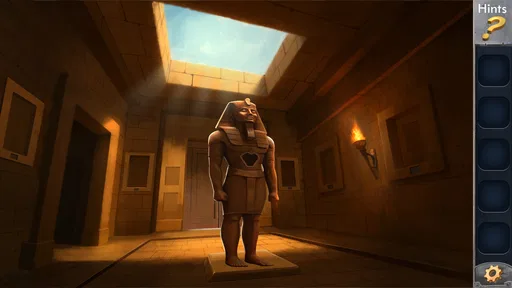
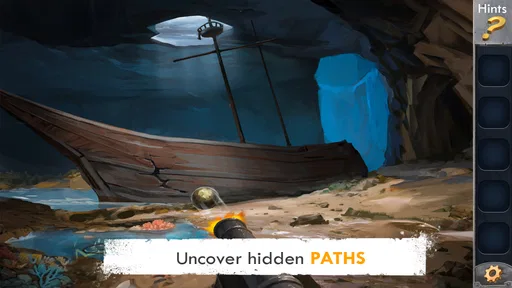
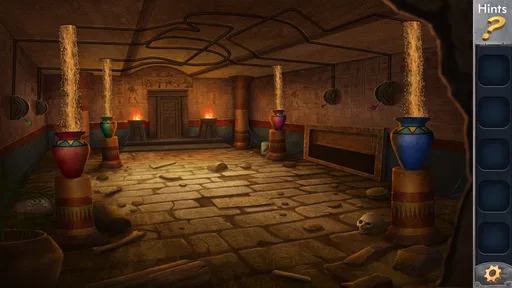
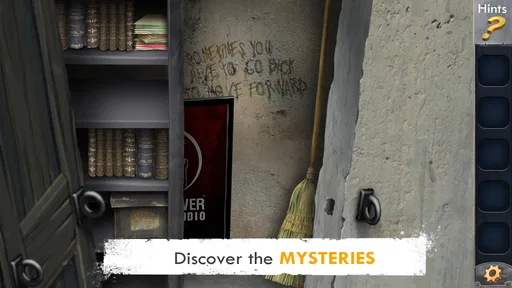
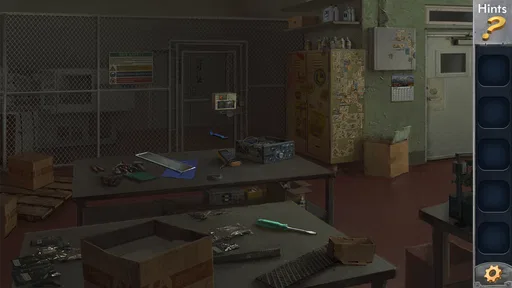
Our Review of Prison Escape Puzzle Adventure
 Analysis by Appyee
I spent time with Prison Escape Puzzle Adventure as a mobile adventure game built around the simple idea of getting out by thinking your way through confinement. That setup sounds familiar, but it works because the game turns each room into a small investigation: I had to look closely, test objects, connect clues, and decide whether I had missed something obvious before trying another solution. It is free to start, aimed at players aged 10 and over, and developed by Big Giant Games.
My first impression was that this is best understood as a puzzle-focused escape experience rather than a fast action game. The appeal comes from observation and deduction, not from reflexes or complicated controls. If you enjoy room-escape challenges on a phone, the basic format is immediately approachable. If you are looking for combat, open-world exploration, or a story that moves quickly between dramatic scenes, this will feel much narrower.
How the escape-room structure feels in everyday play
The central loop is easy to explain but more demanding to play well. I enter a confined location, inspect what is around me, collect the meaning of small details, and use those details to unlock the next step. A clue that looks decorative can become important later, while an item that seems useful may only make sense after I have understood another part of the room. That dependency between clues is what gives the game its satisfying moments.
I found the best way to play was to slow down instead of tapping everything repeatedly. When I rushed, I tended to overlook relationships between objects. When I paused and mentally grouped what I had seen, the puzzles became more readable. This is a useful distinction for new players: the game rewards careful attention more than random experimentation. It is not a title I would open expecting to make progress while half watching a video or answering messages.
A realistic use case is a short evening break after work or school. I can play one section, put the phone down when I reach a difficult clue, and return later with a clearer head. That pause is valuable because escape puzzles often become harder when I keep staring at the same screen. The game suits people who like a self-contained mental challenge in small sessions, although a particularly stubborn puzzle can make a short break last longer than planned.
The controls are naturally suited to a touchscreen because the main actions involve examining and interacting with the environment. That makes the opening easy for younger players and for anyone who does not normally play games. The challenge is not learning a control scheme; it is understanding what the game wants me to notice. In that sense, the interface stays out of the way and puts the responsibility on the player’s reasoning.
Progress depends on attention more than speed
One of the more useful habits I developed was mentally separating clues into three groups: things I could use immediately, things that looked like information, and things that might only matter after another discovery. That simple approach reduced unnecessary tapping and helped me avoid treating every object as equally important. It also made the experience feel less like guessing and more like building a case.
Another practical tip is to remember visual patterns rather than relying on a vague sense that something looked unusual. If a sequence, symbol, color arrangement, or object position appears meaningful, I try to retain it before moving elsewhere. In a mobile escape game, the screen is small and the player can easily lose track of context. Keeping a quick note outside the game can be useful when a puzzle asks me to connect details that appeared at different points.
The pressure here is mostly mental. I did not approach the game as a race against other people. The tension comes from being stuck, second-guessing a solution, and wondering whether I have failed to inspect one small part of the room. That makes the experience calmer than action adventures, but it can also make a mistake feel more personal. When I cannot solve a puzzle, there is no quick reflex trick to hide behind; I need to reconsider my assumptions.
That design will suit patient players, but it is not ideal for everyone. Someone who wants constant movement may find the pace slow. Someone who dislikes puzzles with indirect clues may become frustrated if the next step is not immediately visible. I would also skip it if my main goal is a competitive game with quick matches. Its satisfaction comes from solving the environment, not from outperforming another player.
Spending, progression, and the pressure to continue
The game can be downloaded for free, which makes it easy to try without making an upfront commitment. It includes in-app purchases ranging from $1.49 to $12.99 per item. I treat that as an important part of the decision, especially in a puzzle game where the temptation to spend can appear when I am stuck. The sensible approach is to decide beforehand whether I am willing to pay for optional help or progression-related convenience, rather than making that choice in the middle of frustration.
I did not find it useful to think of spending as a substitute for learning the game’s logic. The strongest moments come from understanding why a solution works. If I immediately use assistance every time a clue becomes difficult, I may move forward, but I lose the main reason to play. For that reason, I would first try a structured method: inspect every area, write down unusual details, test only plausible combinations, and then take a break before considering a purchase.
The purchase range is clear enough to set expectations, but it does not by itself tell me how often a player will feel encouraged to buy something during normal progress. I would therefore avoid promising a completely pressure-free experience. My trust verdict is more measured: the free entry point is attractive, but anyone sensitive to in-app purchases should keep spending controls in mind and decide on a personal limit before playing.
This is also where the game differs from a traditional physical escape room. A real-world room usually has a fixed booking cost and a shared social experience. Here, I can try it alone at no initial price, but the mobile format may present purchase decisions along the way. On the other hand, it is far more convenient: I do not need to arrange a group, travel anywhere, or reserve a time. The trade-off is convenience versus the atmosphere and transparency of a one-time event.
Is the challenge fair for different kinds of players?
I would describe the competitive fairness of this game in a limited but important sense: it is not built around a contest where one player gains an advantage over another. My progress depends on how well I observe and reason, not on defeating opponents or maintaining a ranking position. That makes the purchase question different from a competitive multiplayer game. Spending does not turn into a direct advantage over another person in a match because the core experience is solitary puzzle solving.
Still, fairness can mean more than competition. A puzzle feels fair when the answer follows from clues that are actually available, when the interaction is understandable, and when failure teaches me something. I paid close attention to whether I was making progress through deduction or simply trying combinations until something worked. The game is most enjoyable when I can explain the solution afterward. If a player feels pushed toward guessing, the experience becomes less satisfying even without a competitive system.
Compared with casual matching games, this is a better choice for someone who wants a slower and more thoughtful challenge. Compared with large adventure games, it offers a tighter focus and less wandering. Compared with a physical escape room, it is cheaper to begin and easier to play alone, but it cannot reproduce the shared excitement of several people searching the same space. These differences matter more than a simple question of whether one game is “better.” The right choice depends on whether I want concentration, competition, story, or social play.
I would recommend it to a family looking for a puzzle activity that can be discussed together, even if only one person is holding the phone. A parent can ask a child what a clue might mean, while an older player can handle the more abstract connections. The Everyone 10+ rating makes that kind of shared use feel appropriate for its intended audience, though individual comfort with suspense and confinement themes will still vary.
What I would want to know before installing
The game launched on May 6, 2015, and its current version is 20. It supports devices running Android 7.0 or later. Those details matter if I am installing it on an older phone or tablet, because compatibility is often the first practical question before I invest time in a puzzle game. The title has also reached over ten million installs, with an average rating of 4.2 from around two hundred seventy-five thousand ratings, so it has clearly attracted a substantial audience.
Those figures tell me that the game is established and widely tried, but they do not replace my own judgment about puzzle style. A popular escape game can still be a poor match for someone who dislikes searching rooms, rereading clues, or being temporarily stuck. I would use the audience size as reassurance that the concept has broad appeal, not as proof that every puzzle will suit me.
One question many players have is whether the game is suitable for children. Its content rating is Everyone 10+, so it is positioned for a broad audience rather than adults only. I would still play alongside a younger child if the subject of imprisonment or escape might bother them. The age label is useful guidance, but it cannot predict how every child responds to tension or uncertainty.
Another question is whether it is a good choice for offline moments, such as travel or waiting rooms. I would not assume that automatically. A game can be installed on a device and still have requirements around loading, advertising, purchases, or updates that affect how it behaves away from a connection. Since that experience can vary, I would test it before relying on it for a flight or a long journey rather than discovering a limitation at the worst time.
Players also often want to know whether they can finish without paying. The free starting price makes trying it straightforward, but the presence of paid items means I would not describe the entire experience as guaranteed to be free of spending pressure. My practical advice is to play the opening section, see whether the puzzle logic suits you, and set a device-level purchase restriction if you are handing the phone to a child.
Finally, I would ask whether it is worth choosing over another escape-room game. My answer is yes when I want a focused prison-escape theme, touchscreen investigation, and a solo experience that can be picked up in short sessions. I would choose a different option if I wanted multiplayer cooperation, a highly cinematic narrative, competitive leaderboards, or a clearly defined one-time purchase with no in-app buying decisions.
Small habits that make the puzzles less frustrating
My most effective workflow was to search the room in a consistent direction instead of jumping randomly between objects. I would inspect the visible area, identify anything that could be examined, and only then try combinations. This reduced the common trap of repeating the same action because I had forgotten one overlooked clue. It also made it easier to tell whether I was genuinely stuck or simply had not completed my first pass.
I also recommend resisting the urge to interpret every unusual object as a code immediately. Some details establish context, while others provide direct instructions. Treating everything as a numeric lock or hidden sequence creates false leads. I had better results when I asked a narrower question: what information does this object provide, and which other object could reasonably use it?
A third tip is to stop before frustration turns into random tapping. Five unfocused minutes can be less productive than a short break. When I return, I review the clues in order and look for a connection I dismissed because it seemed too simple. Escape puzzles often punish tunnel vision, and a reset helps me notice the obvious without needing to spend money for assistance.
There is also a useful social option even though the game is not something I would choose for competitive play. I can let another person look at the screen and explain what they notice without handing over control. A fresh pair of eyes often spots a pattern that I have ignored. This makes the game a surprisingly decent conversation activity, but it remains different from a true cooperative game where several players have separate roles.
My trust verdict for patient puzzle players
After weighing the free entry point, the established audience, the age guidance, and the in-app purchase range, I see this as a reasonable recommendation for people who specifically enjoy mobile escape puzzles. Big Giant Games has built the experience around a clear kind of engagement: examine the environment, connect clues, and earn progress through attention. That focus is its strength, but it also defines its limits.
The fairest way to approach it is as a free puzzle trial with spending boundaries, not as a promise of effortless progress. I would install it when I wanted a solo mental challenge and had enough patience to work through confusing moments. I would not choose it for a quick action fix, a competitive session, or a guaranteed no-purchase experience. The $1.49 to $12.99 purchase range deserves awareness, especially for families, but it does not erase the value of being able to try the game without an upfront price.
My final recommendation is positive with conditions. If the idea of escaping through observation appeals to you, this adventure game gives you a convenient way to test that interest on a phone. Keep notes when clues become complicated, take breaks instead of guessing, and decide your spending limit before you begin. With those habits, Prison Escape Puzzle Adventure is more likely to feel like a thoughtful challenge than a frustrating sequence of taps.
Verdict
Strengths of Prison Escape Puzzle Adventure
- Clever puzzles provide a satisfying challenge for escape-game fans.
- Multiple prison environments keep the adventure feeling varied.
- Simple controls make it easy to inspect objects and solve clues.
- Short levels work well for quick gaming sessions.
- The mysterious storyline adds motivation to explore each area.
Limitations of Prison Escape Puzzle Adventure
- Some puzzles can feel unclear without trial and error.
- Hints may be limited or tied to in-game resources.
- Ads can interrupt gameplay between levels or attempts.
- Later stages may repeat familiar puzzle mechanics.
- Performance may vary on older phones and tablets.
Similar Picks in This Category
View All
Roblox
Roblox Corporation4.2

Pokémon GO
Niantic, Inc.3.5

Ninja warrior: legend of adven
TOH Games4.6

Ninja Arashi
Black Panther4.6

Eyes - The Horror Game
Fearless Games sp. j.4.5

Critical Action:Gun Strike Ops
FPS Shooter & Action Game4.3
Frequently Asked Questions
What is Prison Escape Puzzle Adventure about?
Prison Escape Puzzle Adventure is a story-driven puzzle game in which you play as a prisoner trying to break out of a heavily guarded facility. You explore different areas, search for useful objects, solve logic challenges, interact with characters, and uncover clues about the surrounding mystery. Progress usually depends on observing details carefully and combining items in the correct way.
How does the gameplay work in Prison Escape Puzzle Adventure?
The game combines point-and-click exploration with escape-room-style puzzles. You tap around the environment to inspect objects, collect items, and discover hidden interactions. Some puzzles require finding passwords or keys, while others involve arranging symbols, understanding clues, or using inventory items together. The difficulty gradually increases, so careful observation is more important than fast reactions.
Is Prison Escape Puzzle Adventure suitable for beginners?
Yes, the game is generally accessible to players who are new to puzzle adventures, although some challenges can become quite demanding. The early sections help you understand how exploration and item collection work, while later areas expect you to remember clues and think through several steps. Players who enjoy solving problems at their own pace should find the experience approachable.
Does Prison Escape Puzzle Adventure require an internet connection?
Whether a constant internet connection is required can depend on the version installed and the platform’s current requirements. The main puzzle gameplay is designed around single-player exploration, so many sections may be playable offline after installation. However, advertisements, updates, cloud features, or in-app purchases may require connectivity. Check the store listing before downloading if offline access is important.
Are there advertisements or in-app purchases in the game?
Prison Escape Puzzle Adventure may include advertising or optional purchases, depending on the edition and device platform. Ads can sometimes appear between sections or when using assistance features, while purchases may offer ad removal, hints, or other convenience options. The core adventure can usually be approached without spending money, but players should review the store details and permissions before installing.
Play our best games!


